

Get your business and economy news from the world
Provided by AGP
The Real Bottleneck in Investment Research Is No Longer Information
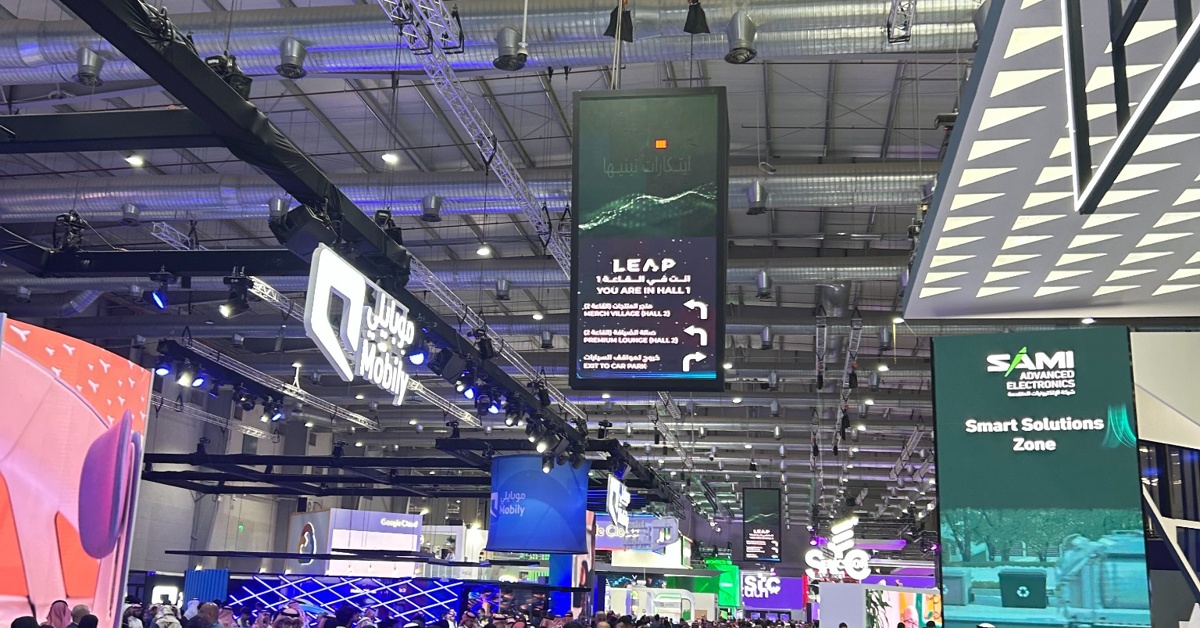
Global technology and AI innovation conference in Saudi Arabia highlighting the growing focus on AI infrastructure, workflow systems, and digital transformation.

Canary Wharf in London, one of the world’s leading financial districts and a major hub for institutional investment and global capital markets.
As AI accelerates research output, investment teams are shifting toward structured workflows and human-guided decision systems.
The future advantage in investment research will come less from access to information and more from the ability to structure fragmented inputs into decision-ready workflows.”
— Daniel Nikic
LONDON, UNITED KINGDOM, May 26, 2026 /EINPresswire.com/ -- Information is no longer the primary constraint in investment research. Data, research tools, and AI-generated outputs have become increasingly accessible, while the volume of available information continues to expand rapidly.
Yet despite this increase in accessibility and analytical speed, investment research has become operationally more complex. Analysts and investment teams now operate across fragmented systems, disconnected workflows, excessive tooling, and rising volumes of unstructured information.
As AI accelerates research output and analytical scalability, the challenge is no longer simply obtaining information. The challenge is increasingly shifting toward the ability to structure, prioritize, synthesize, and operationalize information within scalable investment research workflows.
Why More Information Is Not Solving The Problem
The expansion of information availability has not necessarily improved investment decision-making quality.
In many cases, the opposite has occurred. As research inputs multiply, investment workflows become increasingly fragmented across dashboards, databases, AI tools, market reports, internal notes, and external research systems.
While AI has significantly increased the speed of information generation, speed without structure can create additional operational inefficiencies. More information does not automatically produce better investment outcomes if research systems cannot efficiently organize, validate, prioritize, and synthesize insights into decision-ready outputs.
The bottleneck in modern investment research is increasingly shifting away from information access itself and toward workflow coordination, prioritization, and signal-to-noise management.
As a result, institutional investment processes are increasingly evolving toward more structured operational research frameworks.
The Shift Toward Structured Research Workflows
As research complexity increases, structured workflows are becoming more important within institutional investment processes.
The value of investment research is no longer determined solely by the quantity of available information, but by the ability to coordinate data, AI systems, market intelligence, and human interpretation within a repeatable operational framework.
Increasingly, investment teams are recognizing that research workflow infrastructure itself has become a competitive advantage. Structured systems help reduce operational fragmentation, improve prioritization, strengthen research consistency, and support more scalable decision-making processes across growing volumes of information.
Why Human Judgment Becomes More Important
As AI systems increase research output volume, human interpretation becomes increasingly valuable.
Institutional investment decisions still require prioritization, contextual understanding, conviction formation, execution-risk interpretation, and judgment under uncertainty with areas that remain difficult to automate reliably.
While AI can accelerate information gathering and analytical support, the ability to distinguish signal from noise, identify commercially relevant insights, and synthesize fragmented information into coherent investment conclusions continues to depend heavily on human-guided interpretation.
How Institutional Teams Are Responding
Many investment teams are now operating under increasing pressure to evaluate more opportunities, process larger volumes of information, and deliver faster research outputs without proportionally expanding internal headcount.
As a result, institutional workflows are increasingly shifting toward more structured research systems that combine AI-supported analysis with coordinated human oversight.
Rather than replacing investment professionals, AI is increasingly being integrated as part of broader workflow orchestration systems designed to improve research scalability, operational efficiency, and prioritization across investment processes.
This is contributing to the emergence of AI Concierge investment research systems that combine AI-supported analysis with human-guided workflow orchestration and decision support.
This shift reflects a broader recognition across the investment industry that the future advantage may not come from access to more information alone, but from the ability to structure research operations more effectively.
The Future Of Investment Research Infrastructure
Artificial intelligence did not eliminate the importance of investment research. Instead, it exposed the structural limitations of fragmented research systems and disconnected workflows.
As information volume continues to expand, competitive advantage is increasingly shifting toward the ability to structure, synthesize, prioritize, and operationalize information within scalable decision-making frameworks.
The future of investment research is likely to be defined less by access to information itself, and more by the ability to transform fragmented inputs into coordinated, decision-ready workflow systems supported by both AI-supported infrastructure and human-guided judgment.
Cohres believes this shift is accelerating the importance of structured investment research workflows that emphasize orchestration, prioritization, and human-guided decision infrastructure over isolated AI outputs alone
Daniel Nikic
Cohres
daniel.nikic@cohres.com
Legal Disclaimer:
EIN Presswire provides this news content "as is" without warranty of any kind. We do not accept any responsibility or liability for the accuracy, content, images, videos, licenses, completeness, legality, or reliability of the information contained in this article. If you have any complaints or copyright issues related to this article, kindly contact the author above.
